
Coordinate crews through email, SMS, phone and messaging tools without switching between systems.
Why workforce communication becomes fragmented
For many organizations, workforce communication happens across multiple disconnected tools.
A planner sends an email with project details.
A supervisor follows up through WhatsApp.
A crew member calls to confirm availability.
An SMS is sent for a last-minute schedule change.
Over time, important operational information becomes scattered across different channels, devices and conversations.
The result is reduced visibility, slower response times and unnecessary administrative work.
As workforce operations grow, communication can quickly become one of the biggest operational challenges.
The problem with disconnected communication tools
Most workforce-intensive organizations rely on a combination of:
- Phone calls
- SMS
- Messaging applications
- Internal communication platforms
While each channel serves a purpose, managing them separately creates several problems.
Planners often struggle to answer simple questions:
- Has the worker received the information?
- Which version of the schedule was sent?
- Who confirmed attendance?
- Which communication channel was used?
- Where can the conversation history be found?
Without a centralized system, communication becomes difficult to track and manage.
Bringing workforce communication into one platform
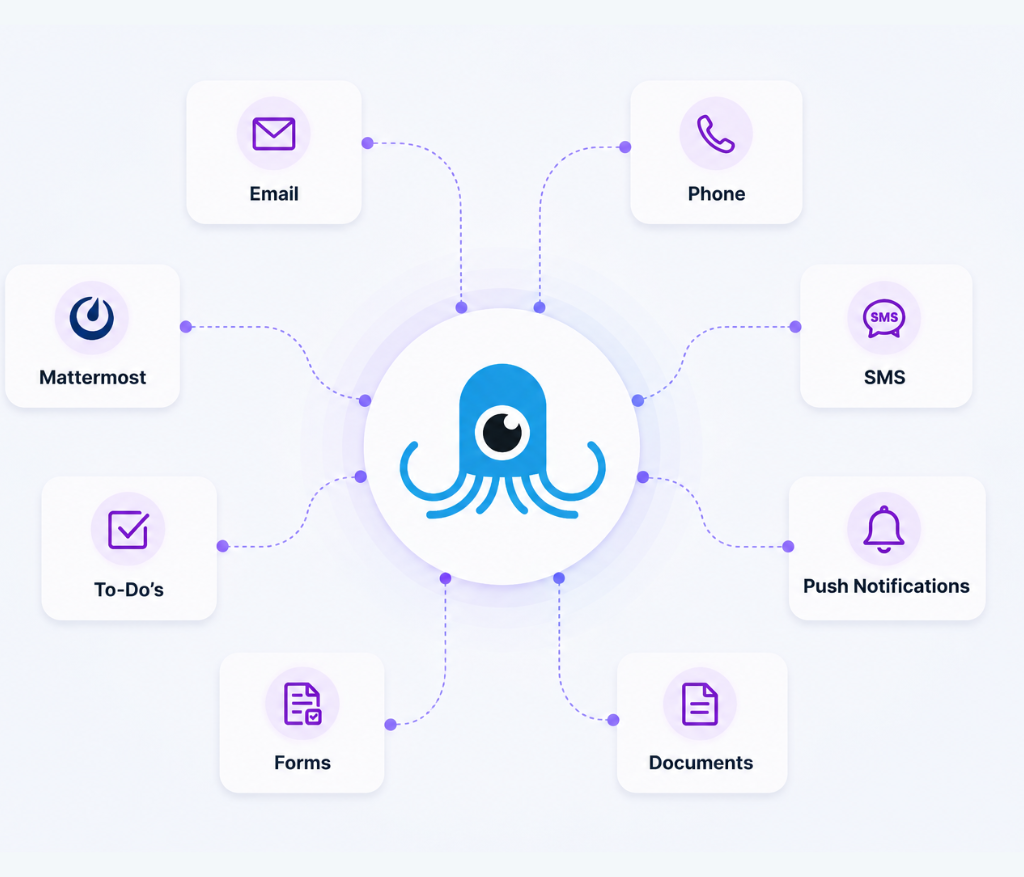
SquidWeb centralizes workforce communication by bringing multiple communication channels into a single operational environment.
Instead of switching between different applications, planners and operations teams can manage communication directly alongside workforce planning, assignments and operational activities.
Supported communication channels can include:
- Phone integration
- SMS services
- Internal messaging
- Collaboration platforms such as Slack or Mattermost
- SMS gateways such as Twilio
This allows communication to remain connected to the actual workforce operation.
Communication in operational context
Communication is most valuable when it is connected to the work being performed.
Within SquidWeb, communication can be linked directly to:
- Projects
- Assignments
- Crew members
- Suppliers
- Operational activities
- Workforce records
This provides a complete communication history without requiring users to search through multiple applications.
Operations teams can access both workforce information and communication records from the same platform.
Faster coordination for changing operations
Workforce operations rarely remain static.
Schedules change.
Workers become unavailable.
Projects expand.
Additional resources are required.
When these situations occur, communication needs to happen quickly and consistently.
By managing communication within the same platform used for workforce planning and coordination, organizations can reduce delays and improve operational responsiveness.
Supporting large and distributed workforces
As organizations grow, communication complexity grows with them.
Managing a small team through a messaging app may work initially, but coordinating hundreds of workers, suppliers and operational stakeholders requires a more structured approach.
A centralized communication platform helps organizations:
- Improve visibility
- Reduce communication silos
- Maintain communication history
- Improve response tracking
- Coordinate distributed teams more effectively
This becomes especially valuable in industries where workforce coordination is critical to operational success.
Real-world applications
Multi-channel workforce communication can support a wide range of operational scenarios.
Live events and entertainment
Keep crews informed about schedules, updates and operational changes.
Temporary staffing
Communicate with workers throughout recruitment, onboarding and assignment processes.
Agriculture and seasonal operations
Coordinate employees, volunteers and seasonal workers across different locations.
Facility services and field operations
Provide workforce updates, instructions and operational information in real time.
One communication hub for workforce operations
Workforce communication should not be disconnected from workforce management.
By centralizing email, SMS, phone and messaging communication within a single platform, organizations can improve visibility, reduce administrative effort and coordinate their workforce more efficiently.
Instead of managing communication across multiple systems, teams can keep workforce planning, assignment management and communication connected in one place.
That is how modern workforce operations stay informed, responsive and scalable.
Want to see workforce communication in action?
Request a demo and discover how centralized communication can improve coordination, visibility and operational efficiency.